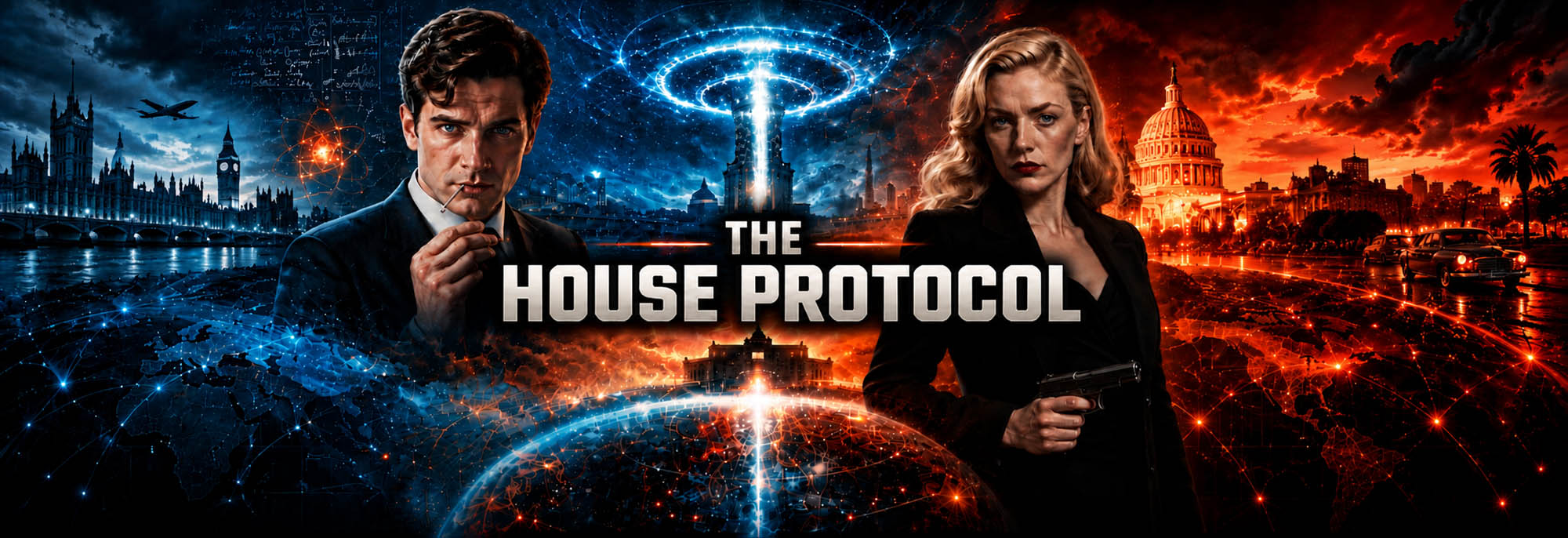
London, 1961. As the Cold War enters one of its most dangerous periods, Britain finds itself confronting a succession of crises that threaten its political stability and international influence. The Berlin confrontation is intensifying, nuclear disarmament protesters are challenging government policy, and Prime Minister Harold Macmillan faces difficult decisions over Britain's relationship with Europe and the United States. Yet beneath the familiar rivalries of international politics, a more disturbing possibility is emerging: that governments may no longer need an external enemy—or even a machine—to lose control of their own decisions.
For British intelligence officers Giles Harrington and Lucy Howard, the latest developments raise unsettling questions about a threat they have spent years attempting to contain. Decision Locking, a technology capable of narrowing human judgment until disagreement disappears, has already demonstrated its potential to influence individuals and political institutions. But now the Office of Decision Integrity (ODI) is encountering something it cannot readily explain. Decisions are being reached with unusual speed, objections are disappearing from official discussions, and policies that should provoke prolonged disagreement are attracting an unexpected degree of unanimity.
At the centre of these concerns is HOUSE — Harmonization Of Urgent Security Evaluations — a British government initiative intended to improve coordination between departments during national emergencies. Conceived as a practical response to the increasing complexity of Cold War decision-making, HOUSE promises faster intelligence assessments, clearer responsibilities and more effective cooperation between Whitehall, the military and the security services. Its objectives appear entirely reasonable. Yet Giles and Lucy begin to question whether the pursuit of administrative efficiency might conceal vulnerabilities that no conventional counterintelligence investigation was designed to detect.
Meanwhile, in Moscow, KGB Major Viktor Kolyadin has developed an increasingly sophisticated understanding of Western political institutions. Having studied the consequences of Decision Locking across successive international crises, he recognizes that British parliamentary government presents a very different challenge from the centralized political structures of the Soviet Union. Its committees, conventions, competing departments and traditions of compromise appear designed to prevent arbitrary power. But Kolyadin is interested in whether those same mechanisms might produce unexpected weaknesses when placed under sufficient pressure.
Within Whitehall, ODI Director Miles Vickers and Deputy Director Eleanor Whitcombe face growing difficulties in determining whether the patterns emerging from government deliberations represent deliberate interference, institutional habit or the ordinary pressures of political leadership. The distinction is critical. Without evidence of an external mechanism, even the suggestion that British decision-making has been compromised risks provoking a confrontation between the intelligence services and the government they are supposed to protect.
For Giles and Lucy, the investigation soon extends beyond committee rooms and classified reports. A series of suspicious incidents, compromised intelligence operations and unexplained connections draws them into dangerous field assignments involving competing security organizations and individuals whose loyalties cannot be taken for granted. As they follow separate but interconnected leads, they discover that identifying an adversary may be considerably easier than establishing whether an apparently legitimate decision has been improperly influenced.
The wider political situation offers little opportunity for caution. Britain's response to the Kuwait crisis, the construction of the Berlin Wall, negotiations with Washington and the debate over European integration place unprecedented demands on government coordination. At the same time, tensions between MI5 and MI6 expose longstanding institutional rivalries, while personal relationships within Britain's political and intelligence establishment create opportunities for compromise, deception and manipulation.
As the investigation develops, Giles begins to question assumptions that have guided him throughout his intelligence career. His education, professional training and instinctive respect for institutional authority have always provided a framework for understanding the world. Now those same qualities force him to consider whether the habits that make organizations effective might also make them vulnerable. Lucy, more willing to challenge established procedures and question the motives of those in authority, approaches the emerging threat from a different perspective. Their contrasting judgments become increasingly important as the boundaries between loyalty, obedience and independent thought begin to blur.
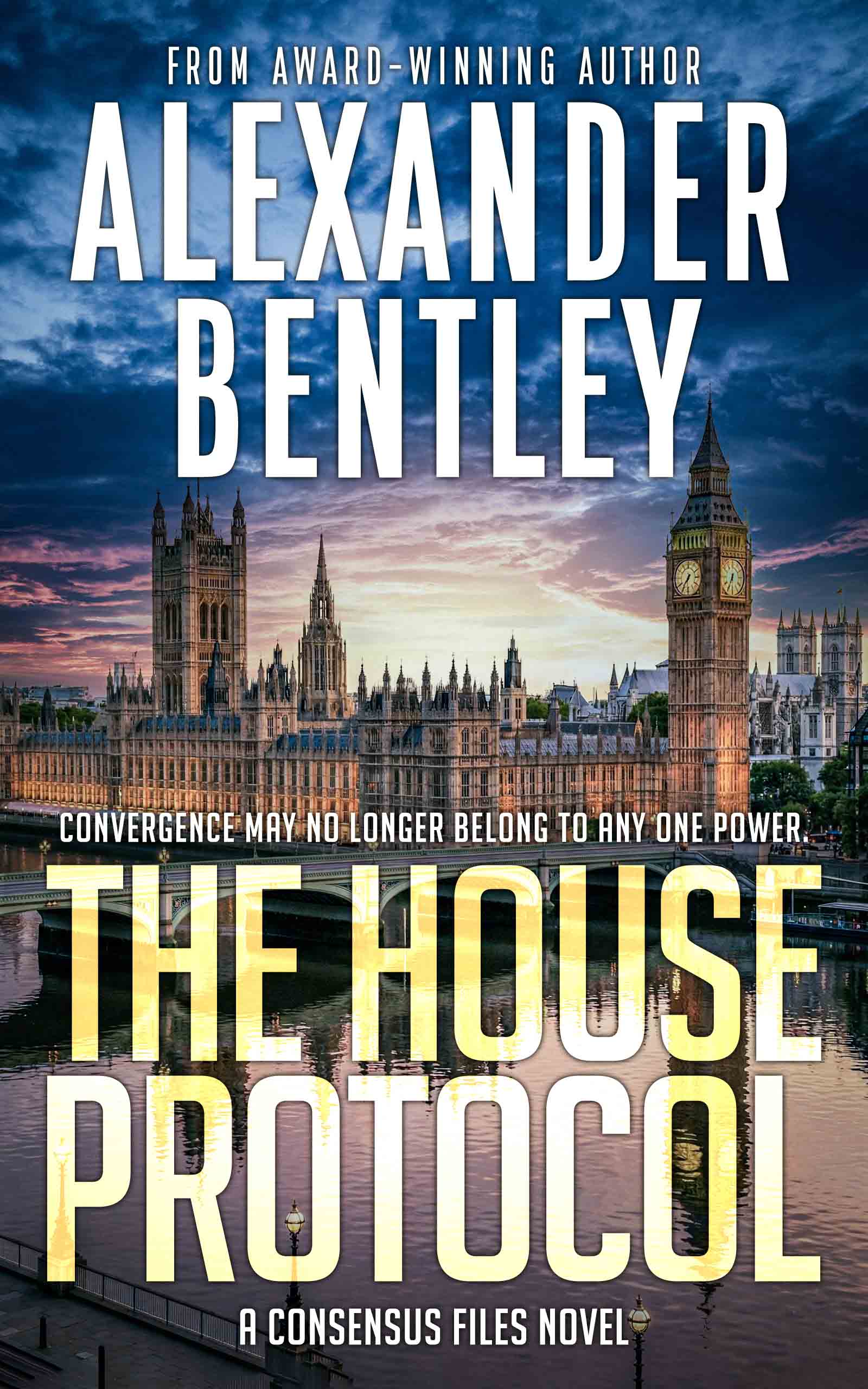
The House Protocol, the fourth novel in The Consensus Files, brings Alexander Bentley's Cold War espionage series into the corridors of Westminster, the intelligence offices of Whitehall and the political confrontations of 1961. Combining historical intrigue, covert field operations and speculative science, the novel explores a disturbing question at the heart of democratic government: whether institutions created to preserve stability can gradually become incapable of recognizing alternatives.
When a government no longer needs to be forced into agreement, how can anyone tell whether its decisions are truly free?

Built by Alexander Bentley. Copyright © 2026 Alexander Bentley