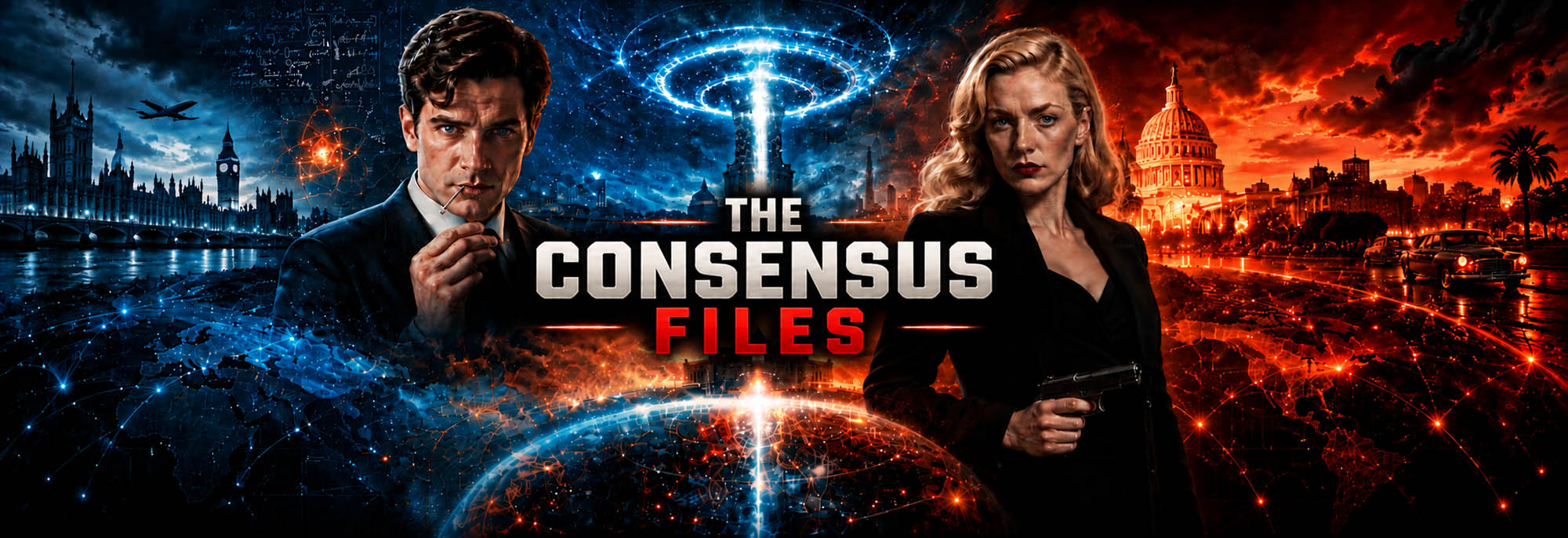
In the Cold War, certainty became a weapon.
The Consensus Files is a four-book Cold War spy-fi thriller series in which the defining struggle of the twentieth century is fought not simply over territory, nuclear weapons or ideology, but over something far more fundamental: the human ability to disagree.
Beginning in 1955, the series follows British intelligence officers Giles Harrington and Lucy Howard as they uncover a revolutionary technology known as Decision Locking. It does not brainwash its targets or compel obedience. Instead, it subtly narrows the process by which people reach decisions. Doubt fades. Alternatives become unreasonable. Opposition disappears. Everyone in the room reaches the same conclusion—and remains convinced they arrived there freely.
At first, Decision Locking is an experimental technology capable of influencing a single room. But as the United States, Soviet Union and competing intelligence organizations recognize its potential, the technology evolves. It becomes portable, increasingly sophisticated and ultimately capable of influencing decisions across enormous distances.
For Harrington and Howard, the danger is not simply who controls it. The greater threat is a world in which nobody can distinguish genuine consensus from manufactured agreement.
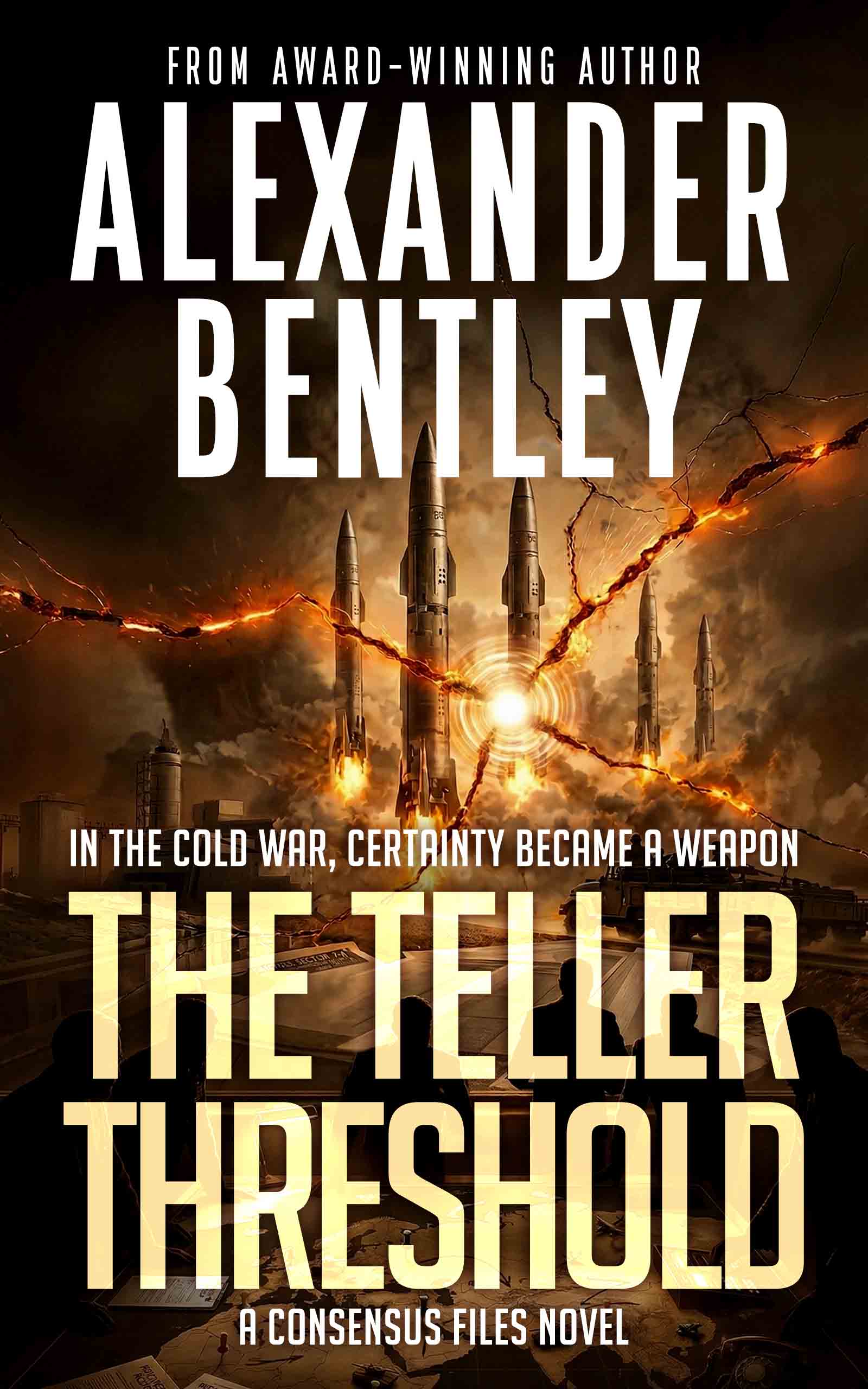
The Teller Threshold — 1955
The story begins with a mysterious incident above Edwards Air Force Base and leads Harrington and Howard to Livermore Laboratory and hydrogen-bomb pioneer Edward Teller. There they discover experiments capable of suppressing disagreement itself.
Their investigation stretches from California to Washington, San Pedro and Guatemala before carrying them into the Arctic and the frozen Soviet shipyards of Murmansk, where a much larger Decision Locking installation threatens to transform an experimental discovery into a geopolitical weapon.
The confrontation produces the secret Teller Accords, intended to prevent either superpower from deploying the technology.
But the knowledge already exists.
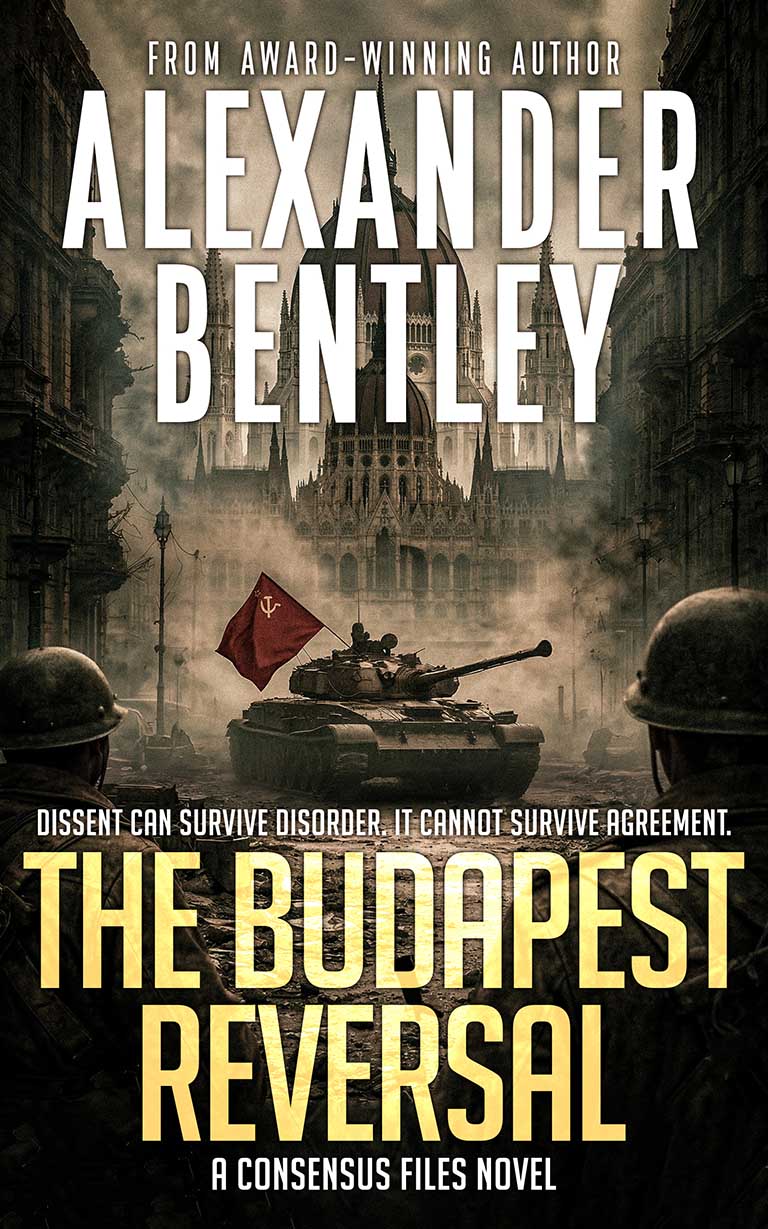
The Budapest Reversal — 1956
One year later, revolution erupts in Hungary.
For a brief moment, Soviet forces appear prepared to withdraw from Budapest. Then something changes. Inside the Kremlin, hesitation disappears. Arguments collapse. A decision already made is suddenly reversed.
The tanks return.
As Harrington and Howard investigate whether Decision Locking has violated the Teller Accords, Soviet operative Viktor Kolyadin begins developing GEMINI—a new generation of the technology based on paired nodes capable of reproducing the same influence in separate locations.
Decision Locking is no longer confined to a single machine or room.
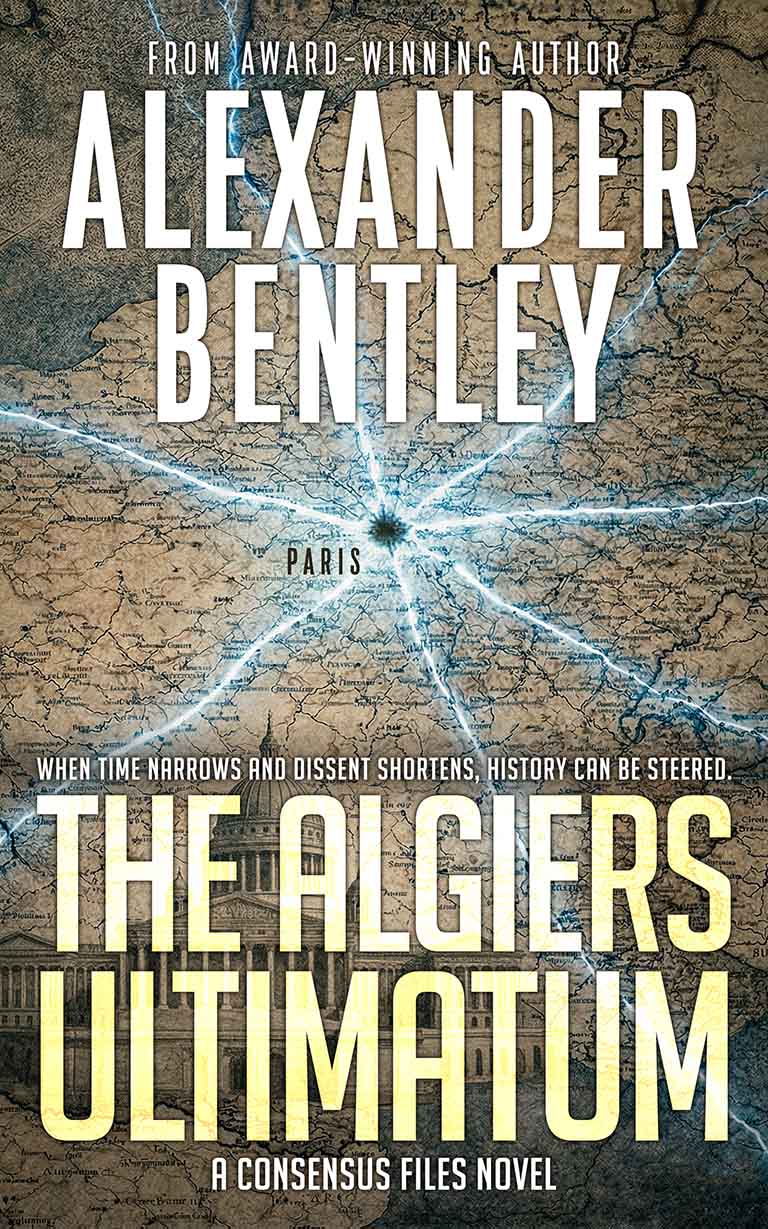
The Algiers Ultimatum — 1958
France is collapsing under the pressure of the Algerian War.
In Algiers, generals demand decisive action. In Paris, the Fourth Republic struggles to survive. Charles de Gaulle waits in the wings as France moves toward a new constitution and a new political order.
Behind the historical crisis, GEMINI receives its first major deployment.
Two cities. Two decision-making centers. One engineered convergence.
Harrington and Howard must determine whether history is unfolding naturally—or whether somebody has discovered how to make events separated by hundreds of miles arrive at the same predetermined conclusion.
The weapon is no longer controlling a room.
It is beginning to influence nations.
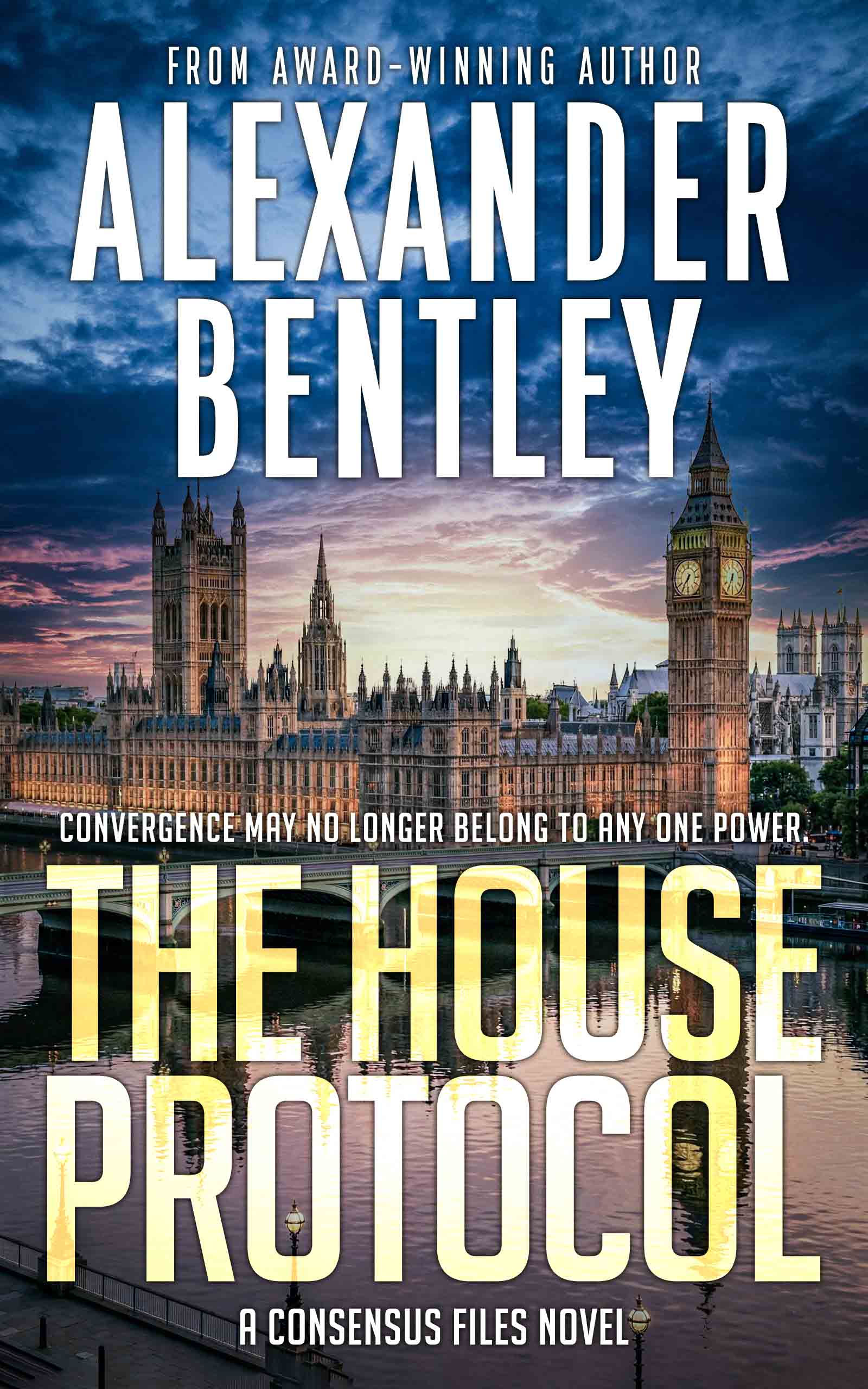
The House Protocol — 1961
By 1961, nuclear confrontation has intensified and public opposition is growing. Britain faces its own political crisis as demonstrations, nuclear policy and parliamentary authority collide.
The final confrontation moves to the heart of British democracy: the House of Commons.
But Harrington has learned the most disturbing lesson of all.
There does not have to be a visible machine.
After years of exposure to Decision Locking, intelligence agencies and governments have begun adopting its logic themselves: urgency over debate, certainty over doubt, consensus over opposition.
The technology may have created something more enduring than a weapon.
It may have created a way of thinking.
Across four novels and six turbulent years of Cold War history, The Consensus Files combines real events, historical figures and authentic intelligence conflicts with speculative science that remains deliberately close to the technological anxieties of its period.
At its center are Harrington and Howard: two operatives repeatedly forced to defend something intelligence organizations, governments and even societies often regard as weakness—the right to hesitate, question, challenge and change one's mind.
Because in the world of The Consensus Files, disagreement is not the problem.
It may be the last defense against tyranny.