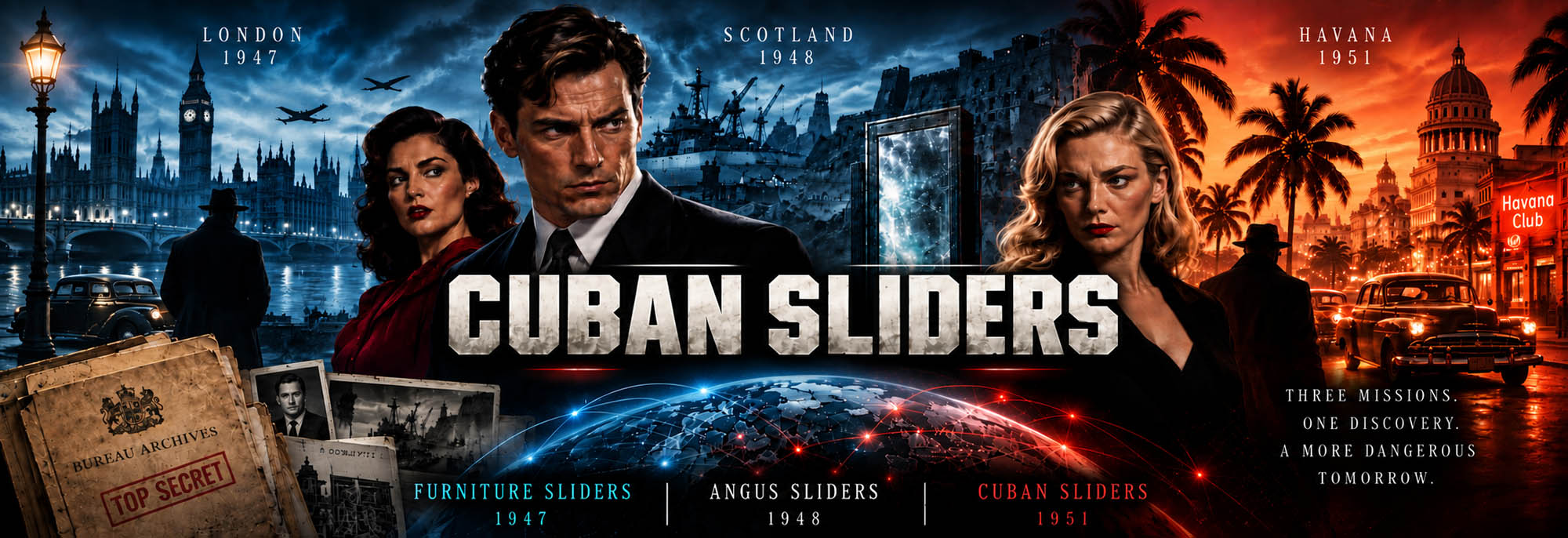
In 1951 Havana, intelligence services circle a Soviet reconstruction of the Mirror—a fractured wartime experiment whose side effects destabilize memory and perception. But the true danger is no longer temporal displacement. It is behavioral. Beneath a rum distillery in Cárdenas, the Soviets have developed an offshoot device known as the Decision Locking Node, a system designed not to alter the past, but to collapse dissent in the present.
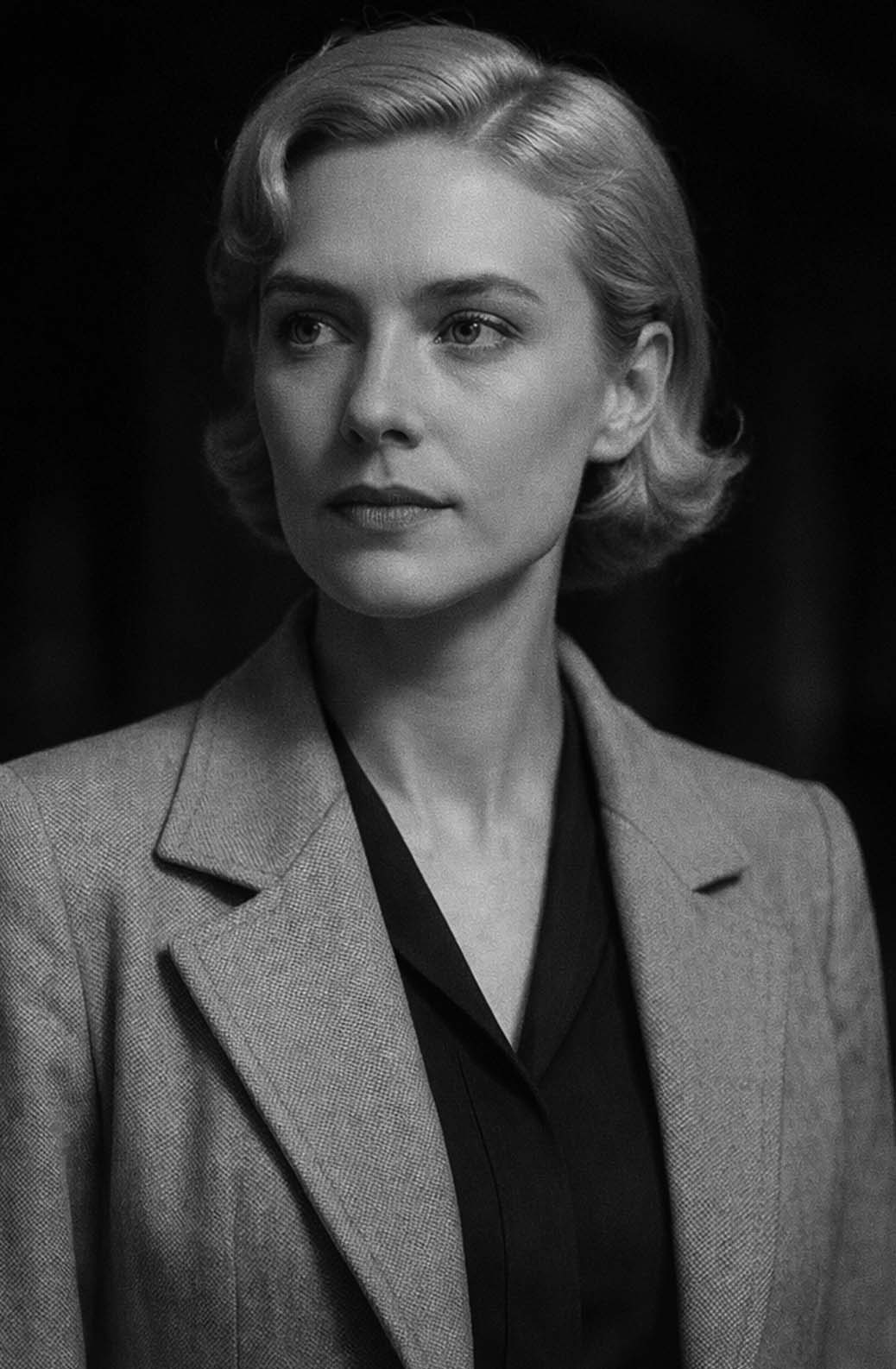 Lucy Howard—codename Locket—operates as a CIA liaison in Havana, moving between British and American intelligence while maintaining divided loyalties and a buried history. Once declared dead in Vienna, she now works directly under James Jesus Angleton, navigating layers of compartmentalization that define postwar espionage culture. She is tasked with retrieving material related to “Behavioral Protocols… and Lock Mechanisms” tied to something underlined twice: Decision Locking.
Meanwhile, Max Calder and Alicia Rayes pursue the Soviet reconstruction of the Mirror network. Resonance readings pulse across Havana, suggesting a fully operational field emanating from Cárdenas. The Mirror’s evolution has shifted from unstable time fractures to something more insidious - narrowing the space in which choices can exist. As Angleton explains, Decision Locking “removes the space between options… A man can’t choose what he can’t conceive”.
 The CIA’s objective is not simple destruction. It is containment—and potentially recovery. Angleton reveals a dual strategy: Calder and Rayes will destroy the Mirror web, while the Agency intends to retain Decision Locking and any viable components for its own strategic use. Batista becomes a focal point of this maneuvering. Stability—American-backed stability—is framed as the goal, but what is truly at stake is leverage. If dissent can be collapsed, outcomes become inevitable.
Calder, Rayes, and Lucy converge amid firefights, betrayals, and collapsing Soviet containment sites. Russian scientist Popov, caught between factions, sacrifices himself during an extraction attempt, underscoring the personal cost of the Mirror’s proliferation. Throughout Havana, resonance disturbances suggest reality thinning—flickers, misalignments, echoes—yet the greater instability lies within institutions.
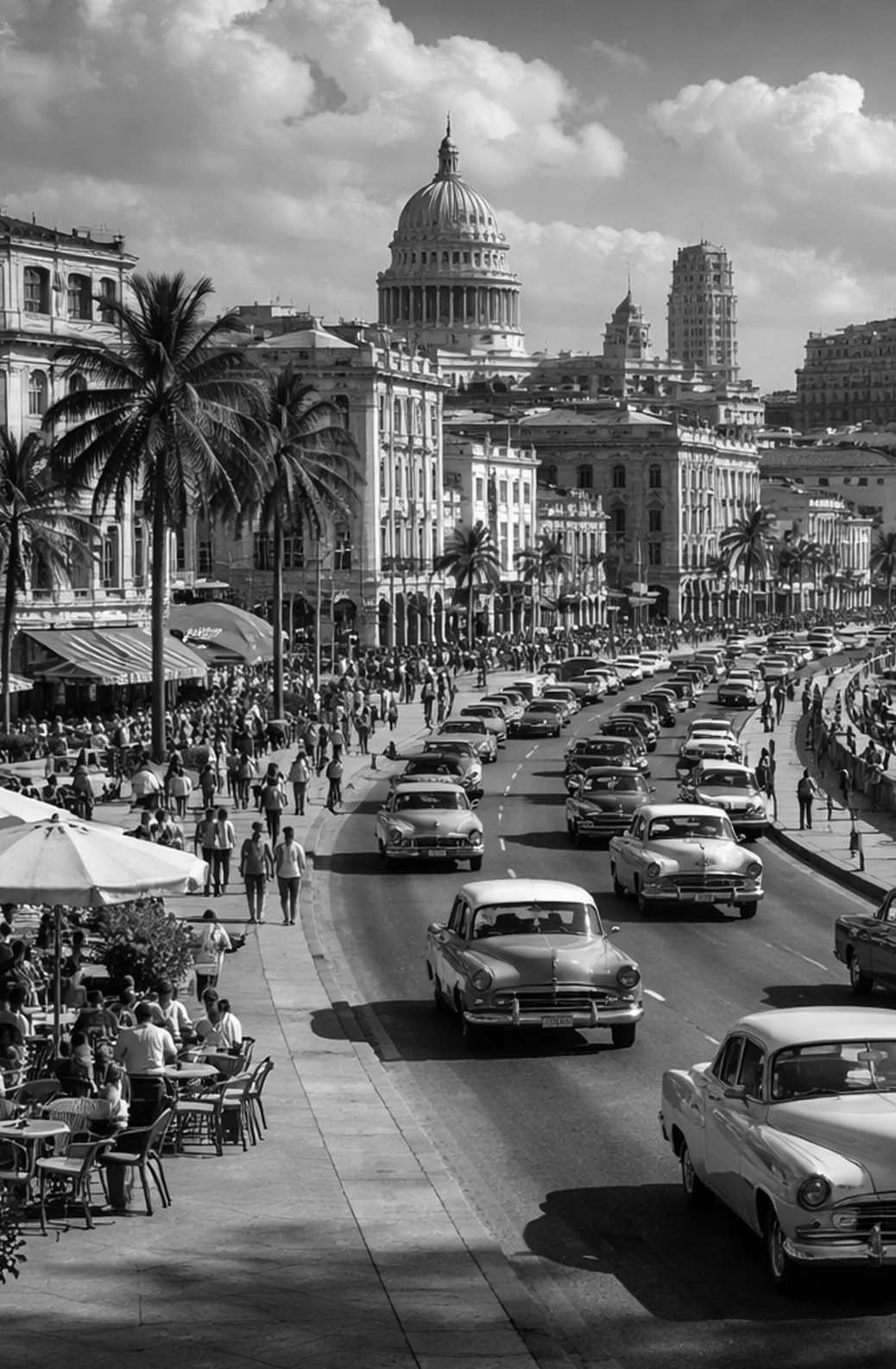 The CIA arranges a covert meeting with Batista’s intermediaries, using the Node as implicit leverage. Manipulation is reframed as “predictability” and “order”. In parallel, the Soviet Mirror web expands, but internal fractures and intelligence pressure destabilize it. Calder pushes toward destruction; Angleton maneuvers toward acquisition.
Ultimately, the Decision Locking Node is secured and shipped west under bureaucratic cover, logged as technical salvage. It is transferred to Site 200 of the University of California Radiation Laboratory at Livermore under Edward Teller’s supervision—not as triumph, but as containment. The CIA calls it safekeeping. Teller calls it restraint.
History proceeds. The Cuban coup unfolds “too easily,” not through overt force but through quiet expiration of resolve. The novel concludes by reframing the trilogy’s thematic arc: the Mirror was never about changing the past. Its evolution reveals that power lies in constraining uncertainty itself. When dissent weakens, outcomes accelerate. When uncertainty collapses, certainty replaces choice.
What is lost is not sovereignty, nor even time.
It is dissent.
And dissent, once removed, is very difficult to restore.