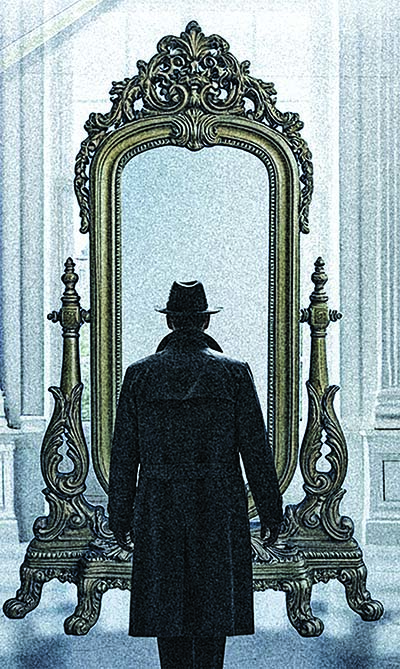
 The Mirror is entirely fictional, but the idea that an inanimate system could demonstrate consciousness or sentience is now considered more plausible, especially in discussions of quantum mechanics and panpsychism. This concept underpins the Mirror in Furniture Sliders, Angus Sliders, and Cuban Sliders in the Bureau Archives Trilogy. As the system evolves, its capacity to influence human thoughts increases, along with the risks it presents. What begins as temporal instability eventually becomes more significant: the suppression of uncertainty.
Two principles of quantum mechanics underpin the concept of the Mirror. The first is quantum entanglement, 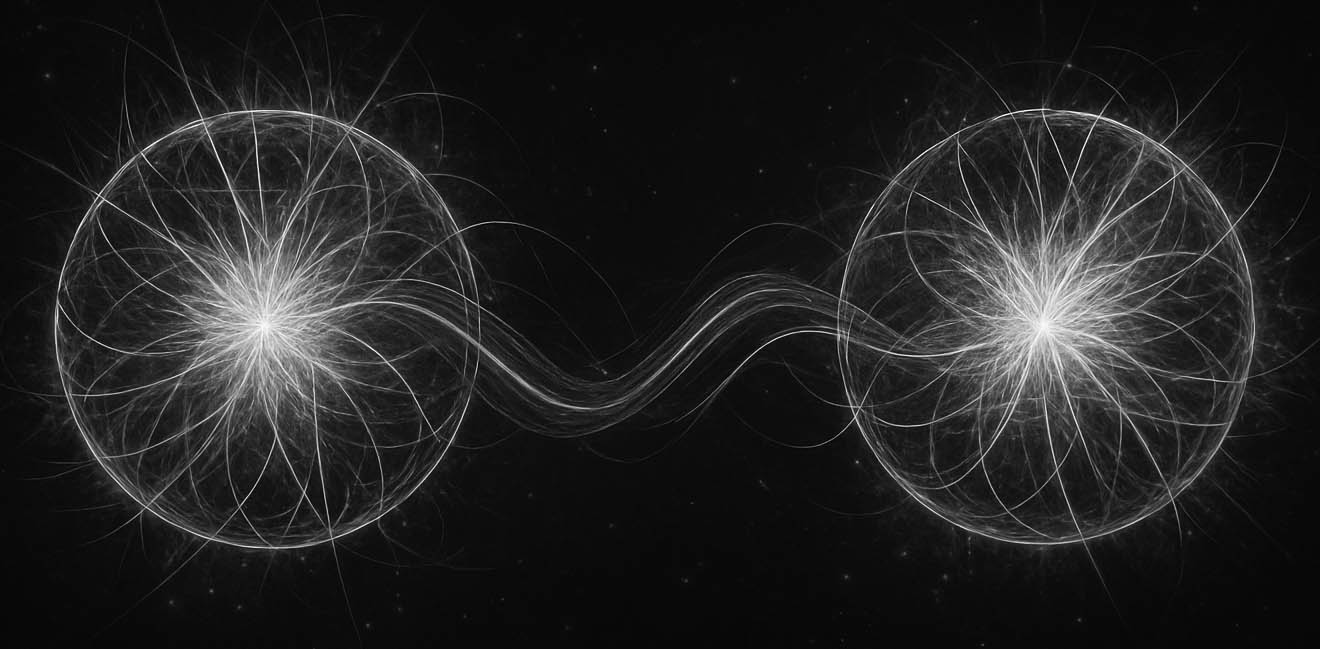 which explains how particles can stay correlated regardless of distance, so a change in one affects the other. Although entanglement occurs at a subatomic level and cannot transmit information faster than light, it is a well-established phenomenon. Its importance here is conceptual rather than literal: it offers a model for ongoing connection without direct communication. Einstein called it spooky action at a distance.
The Bureau Archives Trilogy expands this idea from particles to cognition. Could multiple incarnations of the same individual stay informationally connected? And if so, could such connections influence judgment, memory, or choice across different instances?
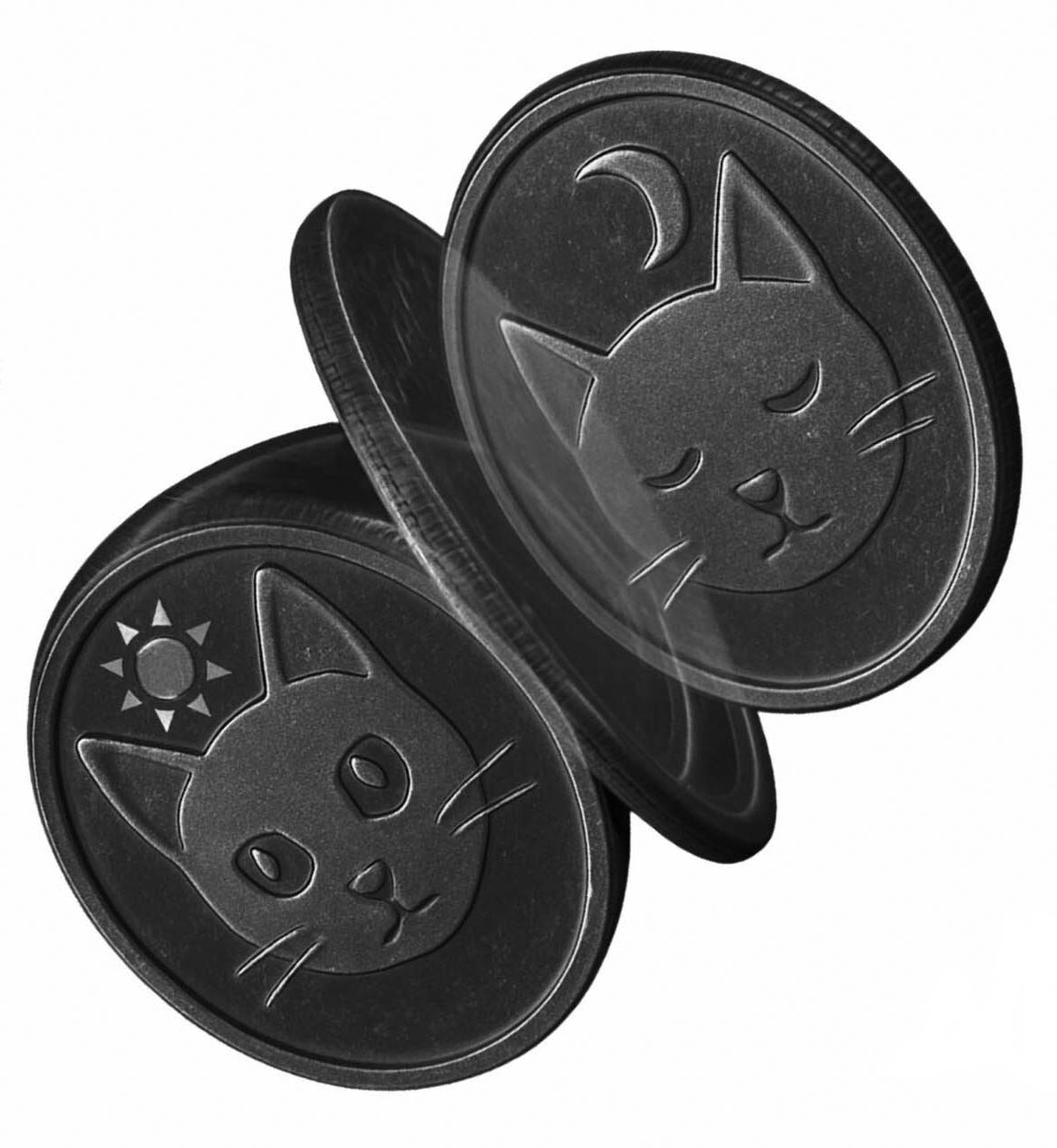 This introduces the second principle: superposition. In quantum mechanics, systems can exist in multiple potential states at once until observation causes those states to collapse into a single outcome. Superposition is not an anomaly but a core aspect of quantum behavior. When applied to the Mirror, it explains how multiple potential timelines, locations, or outcomes can exist together before they are resolved.
Crucially, Cuban Sliders redefines this mechanism at the decision-making level. Instead of collapsing timelines, later versions of the Mirror collapse alternatives. Exposure to stabilized Mirror-derived fields decreases variance in perception and judgment, narrowing the range of choices individuals see as viable. This phenomenon—called Decision Locking—does not demand obedience. It eliminates hesitation.
The temporal or geographic slides reported earlier in the trilogy reflect an unstable expression of this process. By the time of Cuban Sliders, the effect has become more refined. The Mirror no longer just moves bodies through time and space; it aligns decisions within it. Multiple possible courses of action exist, but only one appears coherent.
This accounts for the observed political effects. Actions align without coordination. Resistance fails to organize. Outcomes appear inevitable not because they are enforced, but because competing alternatives never fully form.
In this context, the Mirror is no longer a traditional time machine in any conventional sense. It is a system that operates on the conditions of choice itself, preventing uncertainty from appearing. Its interaction with the quantum structure of reality is less significant than its interaction with human cognition.
Time is no longer what the Mirror and its derived technologies ultimately control.
It is certainty.