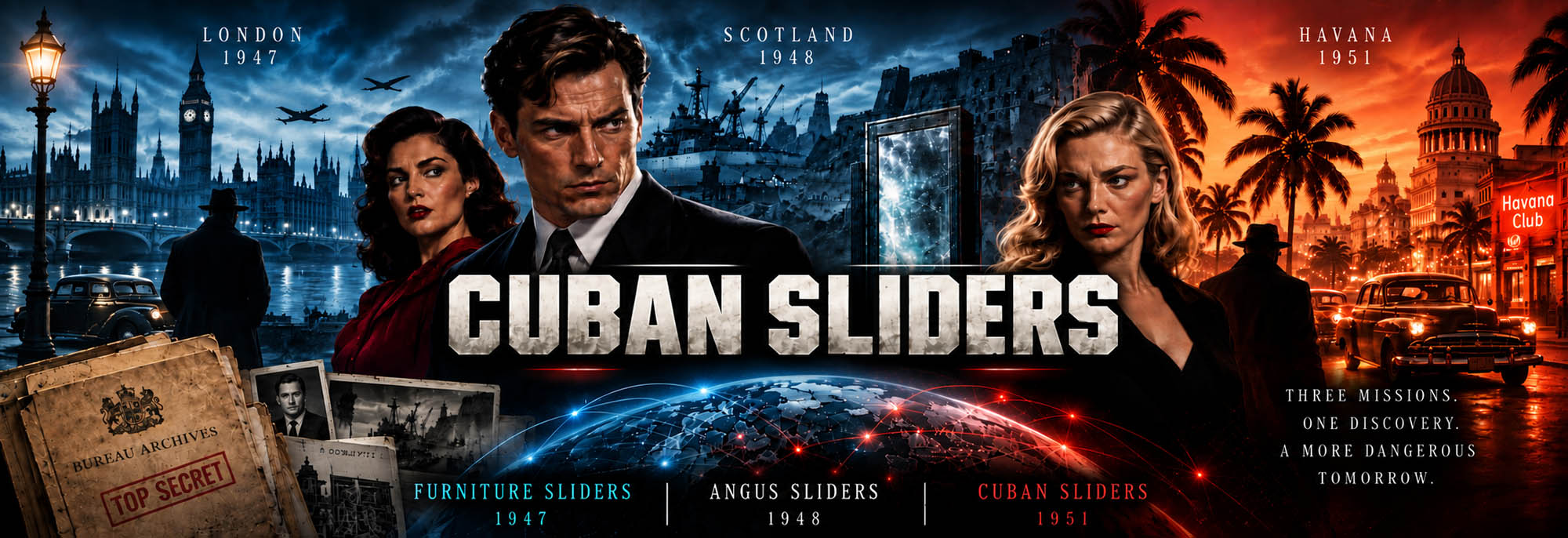
Cuban Sliders is a spy-fi mystery that drops Max Calder back into the shadows of 1951, where a Soviet scientist dies in Havana in a way that screams “impossible,” and the trail points to a rum distillery in Cárdenas hiding Project Oracle V4, a new incarnation of the Mirror tech everyone thought had been stamped out. Max and Alicia Rayes move through Havana and the Grenadines chasing leads, rescuing people the Soviets cannot afford to lose, and trying to get close enough to the machine to kill it without letting it rewrite the rules of the world. Meanwhile, Angleton and Lucy Howard circle the edges of the operation with their own motives, and the book keeps tightening one big question: what happens when power stops arguing and starts narrowing your ability to choose?
What I liked right away is the voice. It’s first-person noir without feeling like a costume, and Bentley is good at giving you the sensory hooks that make the danger feel physical, not abstract. Kingstown’s waterfront “smelled of fish, rum, and diesel,” Basil’s bar hums with calypso and cigarette smoke, and those details do real work because they keep pulling the story back down to street level. The chapter titles have that pulpy snap, too, like the book wants you to keep turning pages even when the ideas get heavy. Sometimes the machinery and briefings threaten to crowd the room, but the writing usually finds its way back to people and place before it goes stale.
The author’s big swing is making the Mirror less about flashy time travel and more about the slow, creepy management of uncertainty. The concept of “Decision Locking” is unsettling because it isn’t mind control in the cartoon sense. It’s closer to a hallway where all the doors quietly vanish except one. That idea lands best when it brushes up against history, like the suggestion that what’s really stolen is dissent, not just secrets or even sovereignty. There are also a few scenes that stick with me because they show the theme instead of explaining it, like Mustique feeling calm and almost immune to the Mirror’s pulse, right up until it “flicker[s]” and the surf hits the sand twice. And by the end, the book makes a choice I respected: it doesn’t pretend everything is cleanly solved.
I’d recommend Cuban Sliders most to readers who like Cold War espionage with a science-fiction twist, especially if you enjoy a film-noir mood and you’re up for a thriller that wants to leave you a little uneasy, not just entertained. If you like spy fiction that asks moral questions while still delivering infiltration, double motives, and that smoky feeling of history sliding into place, this one will hit.
Literary Titan - Rating: 5 ★★★★★